
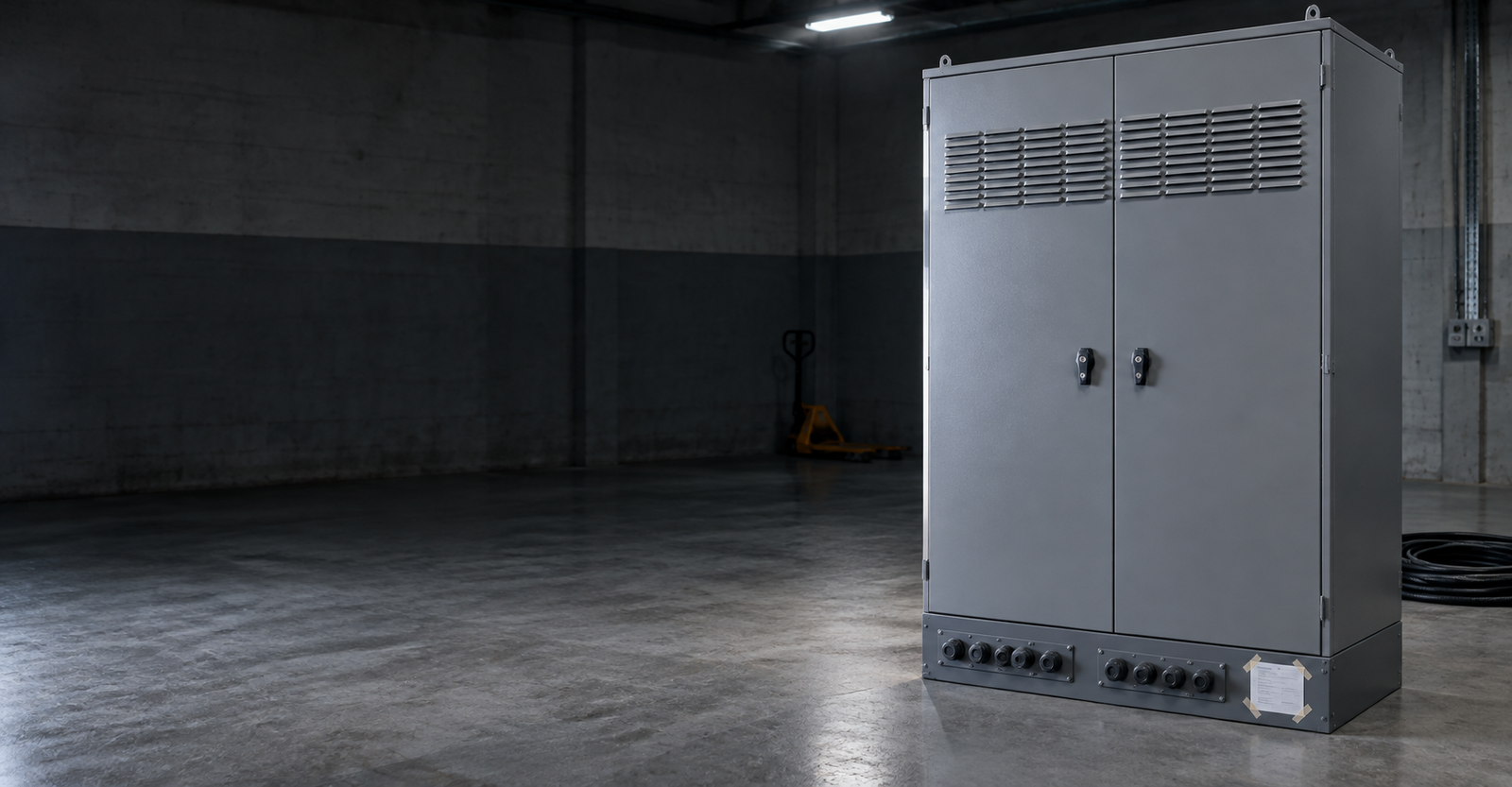
FAMILY 12 · HIGH-VOLTAGE CABINET · 3 BUILDS
261 kWh High-Voltage Battery Cabinet, Air or Liquid Cooled
A complete unit with the PCS inside, delivering three-phase 380V at its terminals. 261 kWh of LFP at 832V, 100 or 125 kW. The air-cooled builds also accept up to 250 kW of PV directly.
261 kWh
Nominal, 13 packs of 314Ah
125 kW
Rated AC output, 137.5 kW peak
832 V
DC bus, 650 to 949V window
2.1 t
Air cooled, 2.6 t liquid
WHO THIS IS FOR
A cabinet that arrives as a plant, not as parts
This is the size where the project starts to matter. It suits a cold store running peak shaving, a fuel station with a variable load, or a factory fighting a demand charge it cannot control. The cabinet lands with the PCS, the BMS, the cooling and the communication stack already inside, so the site work is a foundation, four cables and a network drop.
It is not for a container-scale utility job. Above roughly 500 kWh, look at the container family, where the battery ships without a PCS and the design work sits with your EPC.
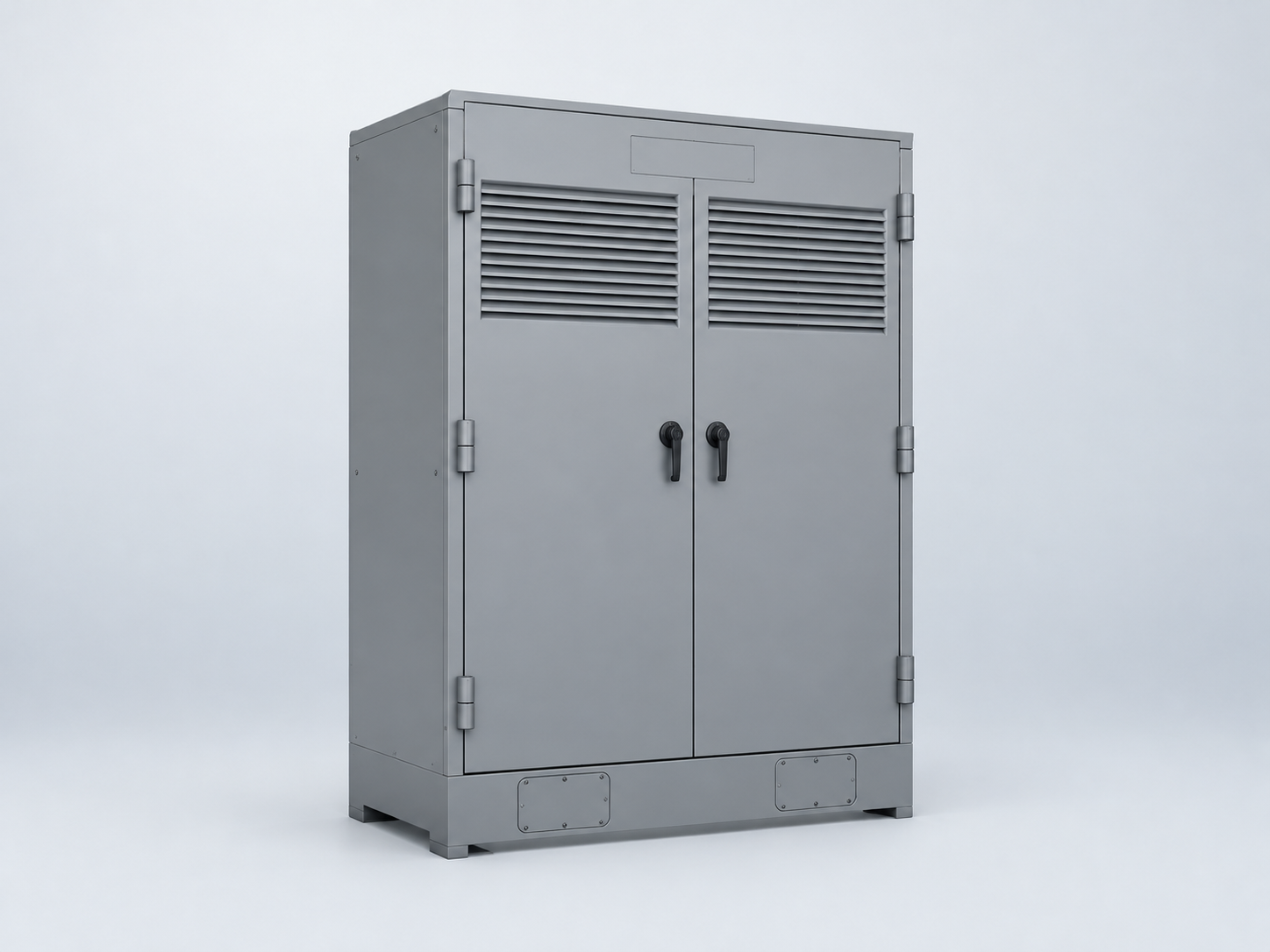
Air-cooled build: 1,260 mm wide, 1,980 mm tall, two doors, 2,100 kg.
THREE BUILDS
Same battery, three different machines
The energy is identical on all three. What changes is how the heat leaves, how the fire is handled, and whether the unit accepts PV. Those three differences decide which one your site can actually take.
| Build | Cooling | AC power | Weight | Dimensions W × D × H | Fire suppression |
|---|---|---|---|---|---|
| 261 kWh / 100 kW | Air | 100 kW | 2,100 kg | 1,260 × 1,420 × 1,980 mm | Optional, specified at order |
| 261 kWh / 125 kW | Air | 125 kW | 2,100 kg | 1,260 × 1,420 × 1,980 mm | Optional, specified at order |
| 261 kWh / 125 kW liquid | Liquid | 125 kW | About 2,600 kg | 1,000 × 1,300 × 2,500 mm | Built in at factory |
All three run 1P260S at 832V with 200A maximum charge and discharge. The liquid-cooled cabinet is 260 mm narrower but 520 mm taller, which changes the door height you need, not just the floor area.
AIR OR LIQUID
The decision that changes the site work
This is not a preference. Air and liquid cabinets need different foundations, different clearances and different approval paperwork.
| Air cooled | Liquid cooled | |
|---|---|---|
| Suppression | Optional at order. Skip it and you own the decision at approval | Perfluorohexanone, aerosol and water suppression, factory fitted |
| Detection | Cell level through the BMS | Temperature, smoke and CO sensors, independent of the BMS |
| Enclosure | IP54, whole cabinet | IP65 battery bay, IP54 electrical bay |
| PV input | Up to 250 kW on 8 trackers, or 200 kW on 10 | Not listed in the catalogue. Confirm before you design around it |
| Noise | Not published | 75 dB or less |
| Ambient limit | Rated to 60 °C | Rated to 50 °C, derated above 45 °C |
| Altitude | Not published | Below 2,000 m, derating above |
| Communication | RS485, CAN, Ethernet | CAN and Ethernet, Modbus TCP or RTU |
| Best for | Shaded plant room, temperate site, PV coupled | Outdoor pad, hot climate, fire authority wants factory suppression |
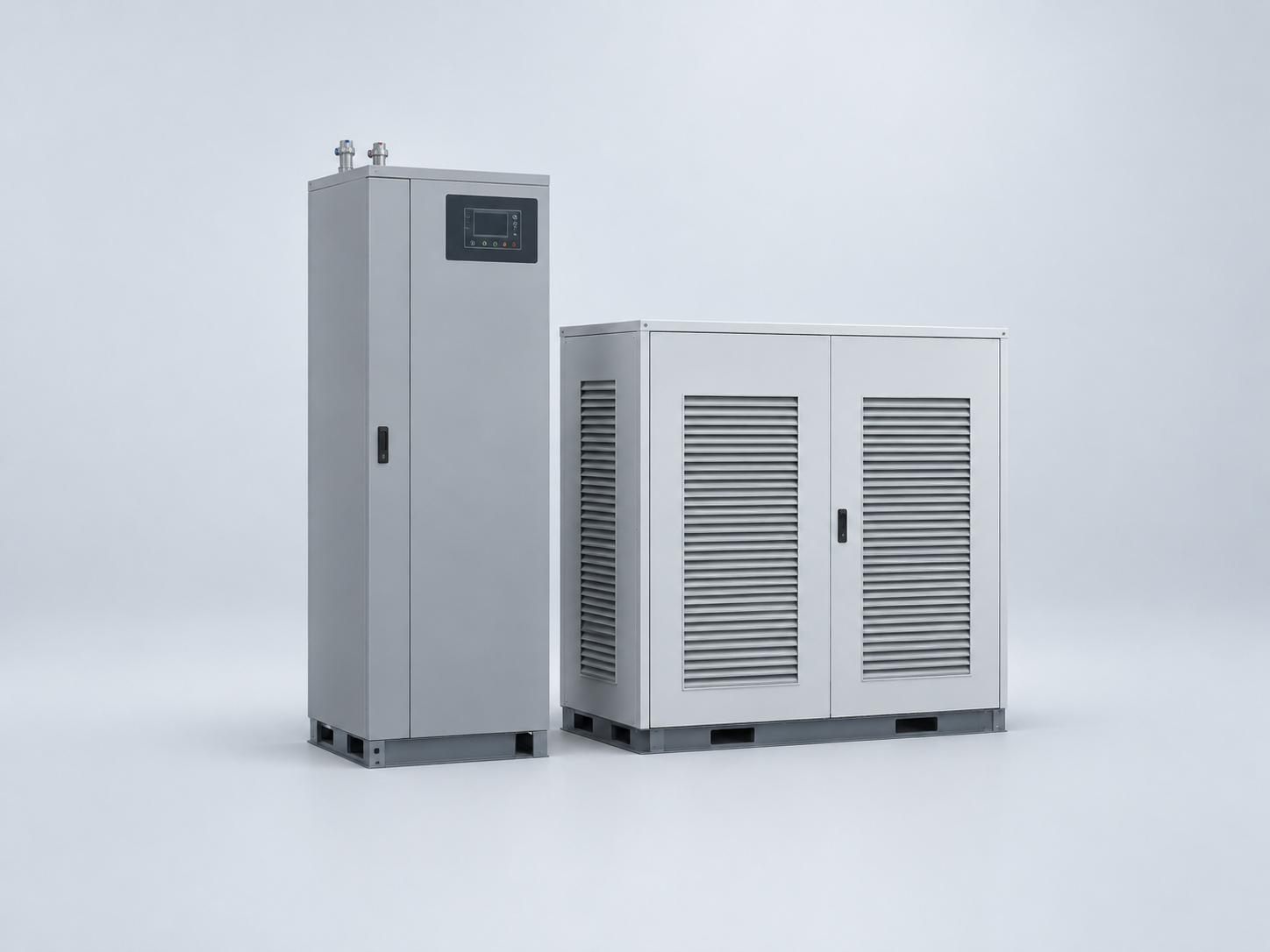
Liquid-cooled build: narrower at 1,000 mm, taller at 2,500 mm, about 2,600 kg.
Why the liquid unit costs more and still wins the order
It arrives with suppression and detection already inside. That means one less item on your procurement list, one less interface for the fire consultant to review, and a datasheet that answers the question an inspector is about to ask.
On the air-cooled cabinet you specify suppression at order. Do that, and the gap narrows. Skip it because the budget was tight, and you are explaining the omission six months later to someone with a clipboard.
PV AND GRID
Up to 250 kW of panels, straight into the cabinet
The air-cooled builds carry their own MPPT trackers, which means the panels land on the cabinet and no separate PV inverter is needed. On the 125 kW build there are 8 trackers, on the 100 kW build there are 10.
| Parameter | 261 kWh / 100 kW | 261 kWh / 125 kW |
|---|---|---|
| Max PV input power | 200 kW | 250 kW |
| Max PV voltage | 1,000 V | 1,000 V |
| MPPT window | 150 to 850 V | 150 to 850 V |
| MPPT trackers | 10 | 8 |
| Max efficiency | 98.70% | 98.70% |
| System efficiency | 88% or better | 88% or better |
| Grid connection | Three-phase four-wire, 380V, 340 to 460V tolerance | Three-phase four-wire, 380V, 340 to 460V tolerance |
| Off-grid output | 380V, 50 or 60 Hz | 380V, 50 or 60 Hz |
HOW IT IS BUILT
Inside the cabinet

Thirteen 64V packs on rack shelves, copper busbar down each side, BMS in the upper bay.
- Thirteen packs, 1P260S. Each pack is 64V at 314Ah, wired in series to 832V. Replace one pack at a time rather than the whole string.
- Copper busbar, not cable. The DC path is solid busbar on both sides of the rack, which keeps the voltage drop predictable across thirteen packs.
- BMS in the upper bay. Reachable without pulling the packs, and away from the heat at the base of the cabinet.
- Air path on the cooled build. Intake at the base, exhaust through the louvred upper doors. Do not place it against a wall without the clearance in our installation drawing, or it will derate on a hot day.
- Liquid build uses glycol. A 50 percent ethylene glycol mix, so it survives a site that sees occasional frost without a heater.
CERTIFICATION
What the paperwork covers
UN 38.3
Transport test summary for the cells and packs. Your forwarder will ask for this before accepting the shipment.
CE & RoHS
Issued per build. A report for the air-cooled cabinet does not cover the liquid-cooled one, so ask for the number that matches what you are buying.
ISO 9001
Plant level, covering the Hangzhou site. Usually enough for EPC prequalification, not for product approval.
TYPICAL CONFIGURATIONS
Three sites this cabinet fits
Sizing still depends on your tariff and load profile. These are the shapes we see most often, not promises about savings.
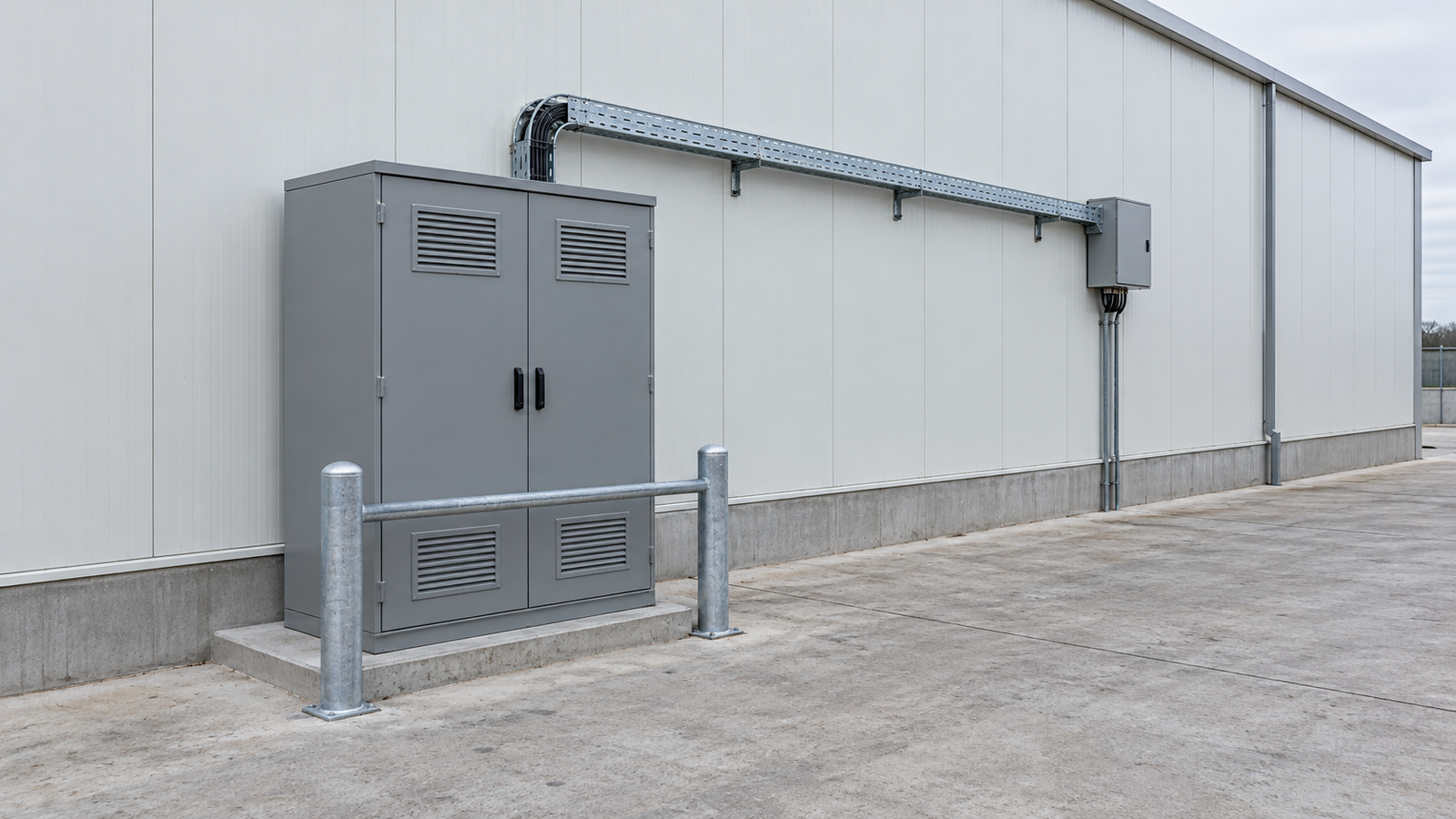
A cabinet on an outdoor pad, cabled into the building distribution board. This is the layout most cold stores use.
COLD STORE, PEAK SHAVING
261 kWh / 125 kW air
Compressors drive a sharp morning peak. The cabinet covers it and recharges at night. At 90% depth of discharge the daily throughput is about 470 kWh across two cycles.
Indoor plant room, suppressed at order
FUEL STATION, OUTDOOR
261 kWh / 125 kW liquid
No plant room, so the unit sits on a pad behind the canopy. Ambient passes 45 degrees in summer, and the fire authority wants factory-fitted suppression.
Outdoor pad, 1,000 × 1,300 mm footprint
FACTORY, PV COUPLED
261 kWh / 125 kW air + 250 kW PV
Roof array lands directly on the cabinet's eight trackers, no separate PV inverter. The battery absorbs the midday surplus and releases it into the evening shift.
Shaded plant room, 8 MPPT
SITE AND BUYING
What the site and the order need
| Foundation | A level concrete pad. For the air-cooled cabinet plan for 2.1 t over a 1.26 by 1.42 m footprint, roughly 1.2 t per square metre. Liquid is about 2 t per square metre. Get a structural check above ground floor. |
| Access | The air-cooled cabinet is 1,260 mm wide and fits a standard roller shutter. The liquid unit is 1,000 mm wide but 2,500 mm tall, so measure the lintel before you book delivery. |
| Clearance | The air-cooled build exhausts through the upper doors. Leave the clearance in our installation drawing or it will derate on a hot day. Liquid needs access to the pump bay for service. |
| Minimum order | One unit. Projects above three units are quoted individually with a shared shipping plan. |
| Lead time | 25 to 35 days after deposit. The enclosure and the fire kit are built to order, so the clock starts on payment. |
| Shipping | Seaworthy crate, 2,100 or 2,600 kg net. Tell us the destination port at enquiry and we will quote the freight separately from the goods. |
| Documents | Foundation drawing, cable schedule, grid interconnection parameters and the fire datasheet go out with the order confirmation. |
| HS code | 8507.60 for the battery. Confirm with your broker, since some destinations classify a complete cabinet differently from a bare pack. |
QUESTIONS
Six things buyers ask about this cabinet
Air cooled or liquid cooled, which should I order?
Air if the cabinet sits in a shaded plant room, the ambient stays under 40 degrees, and you want PV on the same unit. Liquid if it sits outdoors, the summer passes 45 degrees, or the fire authority wants suppression fitted at the factory rather than specified by the buyer. On a cold store with an indoor plant room, air plus ordered suppression is usually the cheaper route to the same approval.
Does the cabinet include the PCS?
Yes. Unlike our container family, this cabinet ships complete with the PCS inside and delivers three-phase 380V at its terminals. The price you are quoted is for a machine that runs, not for a battery that still needs an inverter on site.
Can I connect PV directly?
On the air-cooled builds, yes. The 125 kW build has 8 MPPT trackers and accepts up to 250 kW of panels at up to 1,000V. The 100 kW build has 10 trackers and 200 kW. The liquid-cooled build is documented without PV figures, so if you need PV on that one, ask before you design around it.
Will it pass fire approval?
The liquid unit arrives with perfluorohexanone, aerosol and water suppression plus temperature, smoke and CO detection. The air unit needs suppression specified at order. Neither guarantees local approval, which is a site process. What we can do is send the fire datasheet and cell test reports before you commit, so your consultant can check them against local code first.
What foundation does it need?
A level concrete pad sized to the footprint plus the clearance in the drawing. The air-cooled cabinet puts about 1.2 t per square metre on the slab, the liquid one about 2 t. Above ground floor, or on any slab you cannot confirm, get a structural check. A cabinet that settles unevenly will stress the pack racks.
How long from order to delivery?
25 to 35 days after the deposit clears, plus sea freight. For a project with a fixed commissioning date, tell us the date at enquiry and we will confirm in writing whether it is achievable. If it is not, we will say so before you sign rather than after.
QUICK QUOTE
Send the peak load and the site conditions
Tell us the peak demand in kW, the daily consumption in kWh, the summer ambient and whether the unit sits indoors or out. That is enough to pick between the three builds and give you a price. Usually within 12 hours on a working day.
Related families: HV Cabinet 100 / 120 kWh · Container ESS · All C&I cabinets · Back to all products